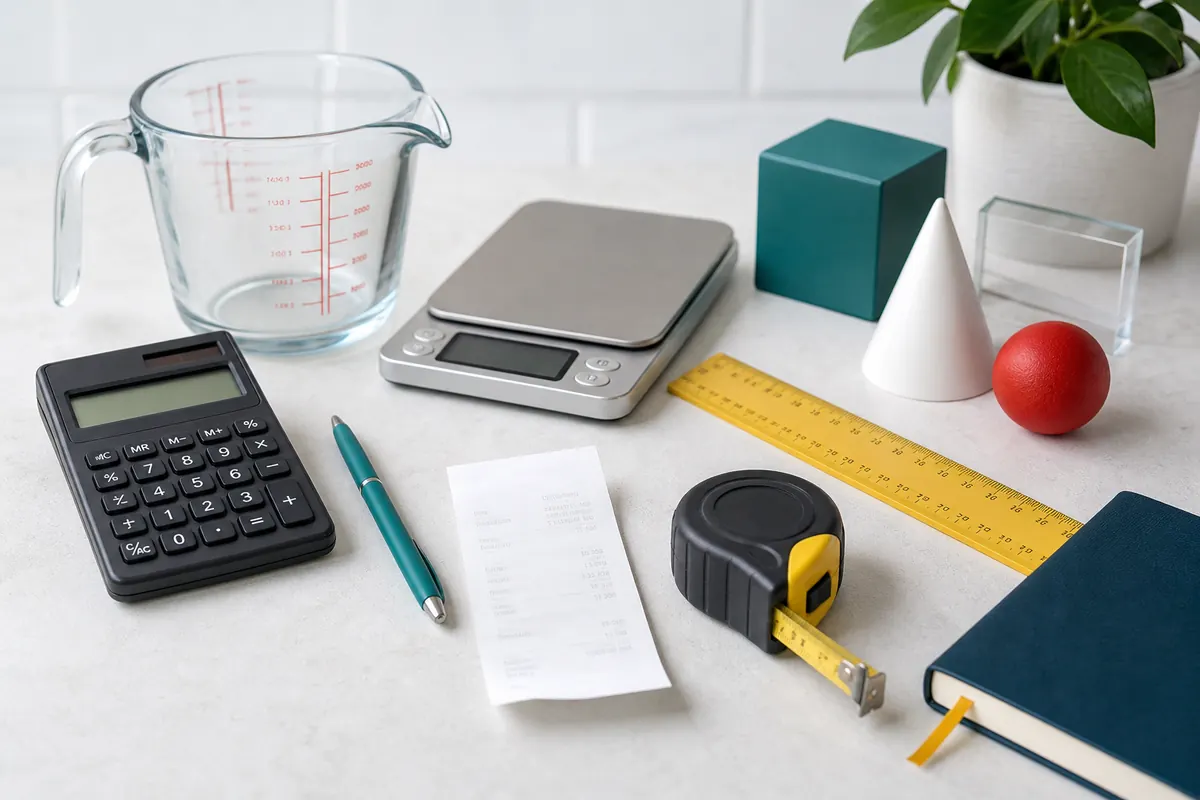
Quick answer: Area Calculator vs Volume Calculator 2026: Surface or Space Measurement? is useful when you need a free online 2026 calculator guide that explains compare two-dimensional surface measurement with three-dimensional capacity measurement in plain language. Start with the calculator that matches the decision you are actually making, then use the second tool as a check so the number does not feel isolated.
What the comparison really means for Area Calculator vs Volume Calculator
Area Calculator and Volume Calculator can look similar because both convert inputs into a final number, but they answer different questions. Area Calculator is usually the better starting point when your main concern is the direct health estimate. Volume Calculator becomes more useful when you want context, comparison or a second view before acting on the result.
A good calculation is not only about pressing a button. The result should explain what was entered, what formula was used and what decision the number supports. That is why this guide keeps the formula, example, mistakes and related Erapse tools close together. You can read the logic first and then open the calculator when you are ready to test your own numbers. This keeps the Area Calculator result useful beside Volume Calculator instead of turning both numbers into a loose estimate.
When Area Calculator is the better first tool
Use Area Calculator first when the question is narrow and you already know the main input values. It keeps attention on age, height, weight, activity level and personal target instead of mixing too many assumptions at once. This is helpful when you are comparing two options, checking a document, preparing a budget, studying a formula or explaining the calculation to someone else.
The best habit is to enter values exactly as they appear in your source record. For money pages, that may mean monthly amount instead of yearly amount. For health pages, it may mean height in the expected unit. For web tools, it may mean keeping the original text unchanged before formatting or conversion. Small input changes can create large differences, so the first calculation should be clean and simple. In this health planning example, Area Calculator should answer the main question while Volume Calculator should confirm the assumption behind it.
When Volume Calculator gives the better second opinion
Volume Calculator is useful after the first answer because it shows whether the number makes practical sense. It can reveal a missing cost, a different unit, a second formula or a limit that the first calculator does not show. In real use, people often need both: one tool for the direct answer and another tool for the surrounding decision.
For example, a result may be mathematically correct but still not comfortable for your budget, schedule, health target, project quantity or workflow. The second calculator helps you ask, "What happens if my assumption changes?" That is the point where calculators become planning tools instead of one-time number generators. Readers using Area Calculator vs Volume Calculator 2026: Surface or Space Measurement? should write down the assumption that affects the result most, because that is usually where mistakes begin.
Formula explained for Area Calculator vs Volume Calculator
Area uses length x width. Volume uses length x width x height or a shape-specific capacity formula.
The formula should be read from left to right. First identify the base value, then apply the rate, duration, unit conversion or rule required by the topic. If a percentage is involved, divide it by 100 before multiplying. If time is involved, convert minutes and hours into one consistent unit. If a table or slab is involved, apply the correct row before adding the final amount. For Area Calculator, check the source value first; for Volume Calculator, check whether the comparison changes the final health planning decision.
Do not round too early. Keep intermediate values precise, then round the final result to the level that is useful for the decision. For finance and tax, two decimal places may be enough for estimates, but official documents can require exact values. For health and utility estimates, a range is often more honest than a single perfect-looking number. In this health planning example, Area Calculator should answer the main question while Volume Calculator should confirm the assumption behind it.
Worked example for Area Calculator vs Volume Calculator
Paint needs area because it covers a surface. Concrete and water tanks need volume because material fills space.
After getting the first answer, change one input at a time. Increase the rate, reduce the duration, adjust the quantity or change the unit and watch the result move. This simple sensitivity check shows which input has the biggest effect. It also catches common mistakes such as entering annual values in a monthly field or using centimeters where the calculator expects meters. Readers using Area Calculator vs Volume Calculator 2026: Surface or Space Measurement? should write down the assumption that affects the result most, because that is usually where mistakes begin.
Real-world use cases for Area Calculator vs Volume Calculator
A fitness user, family member or coach may use this guide before filling a form, comparing two offers, checking a bill, planning a purchase, preparing a workout target, reviewing a project estimate or cleaning data for a report. The useful result is the one that helps the next step. If the number does not change any decision, it is worth checking whether the correct calculator was chosen. This keeps the Area Calculator result useful beside Volume Calculator instead of turning both numbers into a loose estimate.
In day-to-day use, the best workflow is simple: collect reliable inputs, run the direct calculator, compare with the related calculator and write down the assumption behind the number. That written assumption is important because a future rate, salary, weight, date, tax slab, product size or data format may change. For Area Calculator, check the source value first; for Volume Calculator, check whether the comparison changes the final health planning decision.
Comparison table for Area Calculator vs Volume Calculator
| Tool or method | What it explains | Best use |
|---|---|---|
| Area Calculator | Main calculator for surface area | Start here when your question is compare two-dimensional surface measurement with three-dimensional capacity measurement |
| Volume Calculator | Supporting calculator for capacity estimate | Use after the first result needs context |
| Concrete Calculator | Second-angle calculator for room dimensions | Use when the decision needs a cross-check |
| Paint Calculator | Helpful page for material quantity | Use when the first three results are not enough |
Common mistakes users make for Area Calculator vs Volume Calculator
- Using Area Calculator when the decision actually needs Volume Calculator, or the reverse.
- Using a calculator result as medical advice instead of a screening or planning estimate.
- Mixing monthly, yearly, daily or hourly values in the same calculation.
- Rounding the middle steps and then wondering why the final answer is different.
- Copying a result without checking whether the input unit matches the calculator field.
- Treating an estimate as official advice when the situation needs a document, policy or expert review.
Useful tips before you calculate for Area Calculator vs Volume Calculator
- Write the exact question first: choose Area Calculator for the direct answer and Volume Calculator for comparison or context.
- Check every input unit before pressing calculate: age, height, weight, activity level and personal target should all follow the same time period or measurement system.
- Run one realistic example and one cautious example so you know the comfortable range.
- Save or note the assumptions behind the result, especially rates, dates, slabs, units and source values.
- For important decisions, verify the final number against medical history, body composition, training load and advice from a qualified professional before taking action.
Limitations for Area Calculator vs Volume Calculator
Every calculator depends on the values entered by the user. Erapse tools are built for education, estimation and planning. They cannot know every local rule, personal situation, hidden charge, medical condition, document requirement or future update. When the result affects money, tax, health, work, legal documents or official filing, treat the calculator output as a starting point and verify it with the correct source. In this health planning example, Area Calculator should answer the main question while Volume Calculator should confirm the assumption behind it.
Related Erapse tools for Area Calculator vs Volume Calculator
Use these tools when you want to turn the explanation into your own number.
FAQs
What is the main purpose of Area Calculator vs Volume Calculator 2026: Surface or Space Measurement??
Area Calculator vs Volume Calculator 2026: Surface or Space Measurement? helps you understand the calculation before using the free online Erapse tool. It explains which inputs matter, how the formula should be read and how the final number can be used for practical health planning.
Which values should I check before calculating? for Area Calculator vs Volume Calculator
Check age, height, weight, activity level, target and measurement unit before pressing calculate. Most wrong answers come from using the correct formula with a wrong unit, wrong time period, old rate or incomplete source value. On Area Calculator vs Volume Calculator, read this point in the context of health and fitness estimation, because the same advice can mean something different when the inputs, units and final decision change.
How should I compare Area Calculator with Volume Calculator?
Use Area Calculator for the main result and Volume Calculator as a supporting check. If both tools point in the same direction, the estimate is easier to trust. If they differ, review the input unit, formula basis and assumption behind each result.
Why can my answer change after changing one input? for Area Calculator vs Volume Calculator
The result depends directly on the input values. A rate, date, quantity, percentage, unit, body measurement or source text change can move the final answer. Change one value at a time so you can see exactly what caused the difference. For Area Calculator vs Volume Calculator, the useful check is to compare the result with the exact source values used on this page instead of copying a general rule.
Can I use the result as final official advice? for Area Calculator vs Volume Calculator
No. Erapse calculators and blog guides are for education, estimation and planning. For tax, finance, health, payroll, legal or official submission work, verify the final number with the relevant document, official portal, professional adviser or qualified expert. In this health and fitness estimation page, keep the page title beside the result so the number is not separated from the assumption that created it. On Area Calculator vs Volume Calculator, read this point in the context of health and fitness estimation, because the same advice can mean something different when the inputs, units and final decision change. Use this as Area Calculator vs Volume Calculator 2026 review point 1.1 before relying on the result.